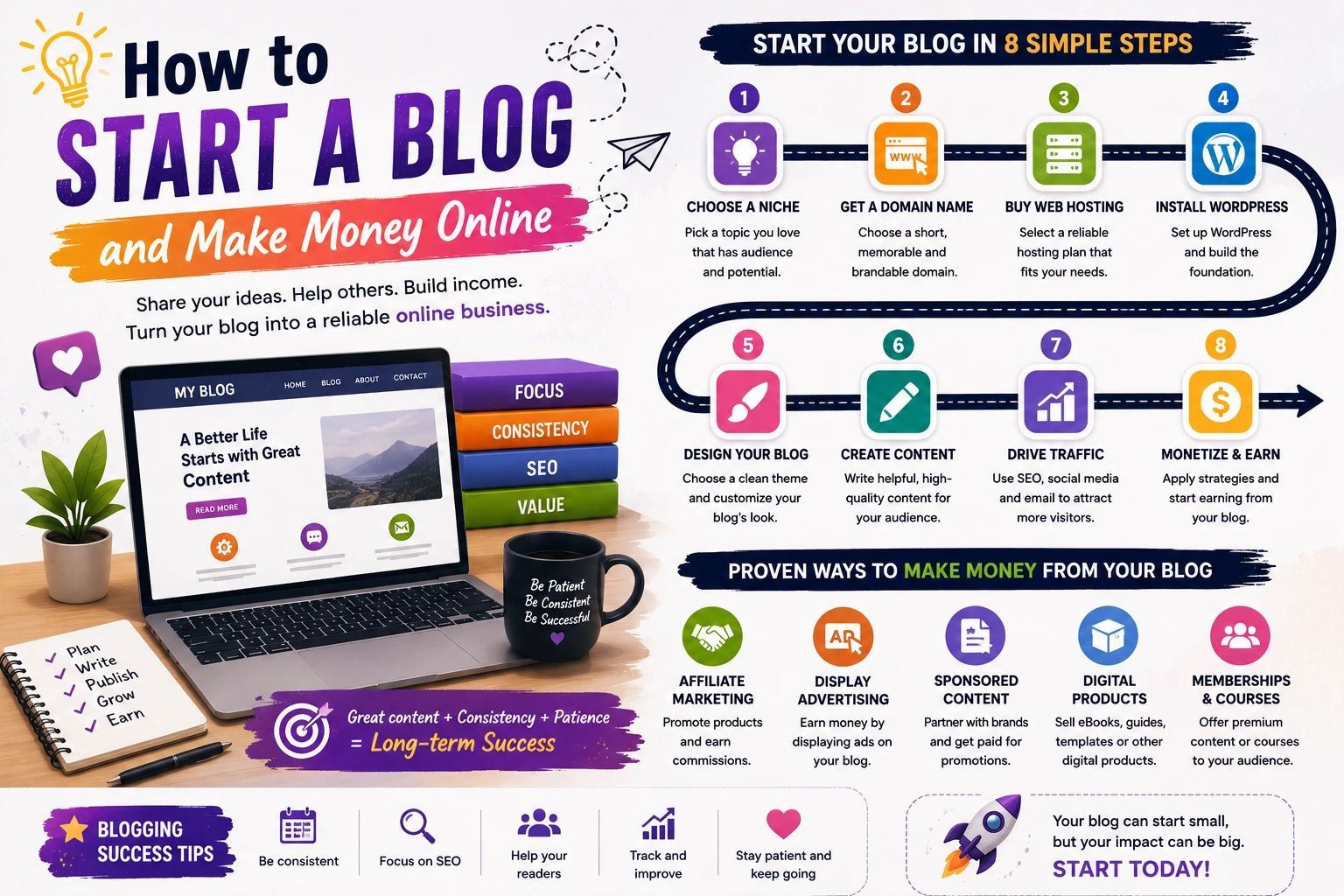
How to Start a Blog and Make Money Online
The opportunity to build an online income through blogging remains stronger than ever. While the digital landscape has evolved significantly, businesses, creators, and entrepreneurs continue to use blogs as powerful platforms for attracting audiences, generating leads, and creating sustainable revenue streams. Understanding how to start a blog and make money online is no longer just a hobby-related skill; it has become a legitimate business opportunity.
A successful blog can generate income through advertising, affiliate marketing, sponsored content, digital products, consulting services, and more. However, profitability requires a strategic approach. This guide explains the complete process, from selecting a niche to implementing effective blog monetization strategies that support long-term growth.
Why Blogging Is Still a Profitable Online Business
Despite the growth of social media and video content, blogging remains one of the most reliable online business models.
A blog offers several advantages:
- Full ownership of your content
- Long-term organic traffic from search engines
- Multiple monetization opportunities
- Authority building within your niche
- Low startup costs
- Scalability over time
Unlike social media platforms where algorithms frequently change, a blog gives you greater control over your audience and business growth.
Choose a Profitable Blog Niche
The foundation of every successful blog is selecting the right niche.
A niche defines the primary topic and audience your blog serves.
Characteristics of a Strong Blogging Niche
A profitable niche should have:
- Consistent search demand
- Monetization opportunities
- Audience engagement
- Long-term relevance
- Personal interest or expertise
Popular Profitable Blog Niches
Examples include:
- Personal finance
- Technology
- Health and fitness
- Digital marketing
- Web development
- Career advice
- Online business
- Education
- Productivity
- Travel
Before making a decision, conduct keyword research to evaluate demand and competition.
Select a Domain Name and Hosting Provider
Your domain name represents your brand online.
Choose a name that is:
- Easy to remember
- Relevant to your niche
- Professional
- Simple to spell
Hosting Considerations
Reliable hosting directly affects:
- Website speed
- Security
- User experience
- SEO performance
Look for hosting providers that offer:
- High uptime
- SSL certificates
- Daily backups
- Fast server performance
- Quality customer support
A strong technical foundation supports long-term growth.
Install a Content Management System
Most successful bloggers use WordPress because it offers flexibility, scalability, and extensive SEO capabilities.
Benefits of WordPress
- Beginner-friendly interface
- Thousands of plugins
- Customizable themes
- Strong SEO support
- Large developer community
After installation, configure essential settings such as permalinks, security measures, and SEO tools.
Design a Professional Blog
A professional design builds trust and improves user experience.
Focus on:
- Clean layouts
- Fast loading pages
- Mobile responsiveness
- Simple navigation
- Readable typography
Essential Pages Every Blog Needs
Include:
- Home Page
- About Page
- Contact Page
- Privacy Policy
- Terms and Conditions
These pages improve credibility and support compliance requirements.
Create High-Quality Content
Content remains the most important factor in blogging success.
Search engines reward websites that consistently publish valuable and relevant information.
Characteristics of Great Blog Content
Effective content should:
- Solve specific problems
- Answer search intent
- Be well-structured
- Include accurate information
- Provide actionable insights
Content Types That Perform Well
- Tutorials
- How-to guides
- Case studies
- Product reviews
- Comparisons
- Industry insights
The goal is to become a trusted resource within your niche.
Learn SEO for Bloggers
Search engine optimization is essential for generating consistent organic traffic.
Without SEO, even excellent content may remain invisible.
Key SEO Elements
Keyword Research
Identify terms your audience actively searches for.
Focus on:
- Primary keywords
- Long-tail keywords
- Search intent
- Keyword difficulty
On-Page SEO
Optimize:
- Title tags
- Meta descriptions
- Headers
- URL structures
- Internal links
Technical SEO
Improve:
- Website speed
- Mobile usability
- Crawlability
- Site architecture
Strong SEO increases visibility and attracts targeted visitors.
Build Consistent Traffic
Traffic is the lifeblood of every profitable blog.
The more qualified visitors you attract, the greater your monetization opportunities.
Traffic Sources
Organic Search
Google remains one of the most valuable traffic channels.
Benefits include:
- Long-term sustainability
- High purchase intent
- Consistent growth potential
Social Media
Promote content through:
- X
Email Marketing
Email lists provide direct access to your audience.
Benefits include:
- Higher engagement
- Better conversion rates
- Audience ownership
Successful bloggers invest heavily in email list growth.
How to Make Money Blogging
Once your blog receives consistent traffic, monetization becomes possible.
There are several proven methods for generating revenue.
Affiliate Marketing
Affiliate marketing is one of the most popular ways to make money blogging.
You earn commissions by recommending products or services.
Examples
- Web hosting
- Software tools
- Online courses
- Business services
- Technology products
Benefits
- Low startup costs
- No inventory management
- Scalable income potential
Affiliate marketing works best when recommendations align with audience needs.
Display Advertising
Advertising networks allow publishers to earn revenue from page views and ad clicks.
Popular Advertising Platforms
- Google AdSense
- Premium ad networks
- Direct advertising partnerships
Advantages
- Passive income potential
- Easy implementation
- Revenue from informational content
As traffic grows, advertising revenue often increases proportionally.
Sponsored Content
Brands frequently collaborate with established bloggers.
Sponsored content may include:
- Product reviews
- Brand features
- Case studies
- Promotional articles
Benefits
- Higher earnings per article
- Long-term brand relationships
- Additional business opportunities
Transparency is essential when publishing sponsored content.
Sell Digital Products
Many bloggers generate substantial income through digital products.
Examples include:
- E-books
- Online courses
- Templates
- Checklists
- Membership programs
Advantages
- High profit margins
- Scalable revenue
- Complete ownership
Digital products often become a major income source as authority grows.
Offer Services
A blog can function as a lead-generation platform for professional services.
Examples include:
- Consulting
- Coaching
- Freelance development
- Marketing services
- Design services
For many professionals, service revenue provides the fastest path to profitability.
Build an Email List Early
Email marketing is often overlooked by beginners.
However, successful bloggers prioritize list building from day one.
Benefits of Email Subscribers
- Direct communication
- Repeat traffic
- Product promotion opportunities
- Higher conversion rates
List-Building Strategies
- Free guides
- Templates
- Checklists
- Mini courses
- Resource libraries
An engaged email audience becomes a valuable business asset.
Avoid Common Blogging Mistakes
Many blogs fail because of preventable mistakes.
Common Errors
Choosing a Broad Niche
Highly competitive topics are difficult to dominate.
Publishing Inconsistently
Consistency builds audience trust and search visibility.
Ignoring SEO
Traffic growth becomes significantly harder without optimization.
Expecting Immediate Results
Blogging requires patience and long-term commitment.
Prioritizing Monetization Too Early
Focus first on audience growth and value creation.
Avoiding these mistakes improves your chances of success.
How Long Does It Take to Make Money From a Blog?
Results vary depending on:
- Niche competition
- Content quality
- SEO strategy
- Publishing consistency
- Marketing efforts
Typical Timeline
- 3–6 Months: Initial traffic growth
- 6–12 Months: Early monetization opportunities
- 12–24 Months: Significant revenue potential
Blogging should be viewed as a long-term business rather than a quick-income strategy.
Scaling Your Blogging Business
Once your blog gains traction, focus on expansion.
Growth Strategies
- Publish more content
- Build topical authority
- Hire writers
- Expand affiliate partnerships
- Launch premium products
- Improve conversion rates
Scaling transforms a blog from a side project into a sustainable online business.
The Future of Blogging
Blogging continues to evolve alongside advances in search technology and artificial intelligence.
Successful blogs increasingly focus on:
- Expertise
- Original insights
- User experience
- Authority building
- Problem-solving content
Search engines reward websites that provide genuine value and trustworthy information.
The fundamentals of quality content and audience trust remain unchanged.
Conclusion
Learning how to start a blog and make money online is one of the most accessible ways to build a long-term digital business. By selecting a profitable niche, creating high-quality content, implementing effective SEO strategies, and utilizing proven monetization methods, bloggers can generate sustainable income while building authority within their industries.
Success does not happen overnight. Consistency, patience, and a commitment to providing value are essential. Whether your goal is earning supplemental income or building a full-time online business, a strategically developed blog can become a powerful asset that generates traffic, leads, and revenue for years to come.